
Insulation Guide
Understanding Insulation R-Values
How to Choose the Best Insulation for Your Saskatchewan Home
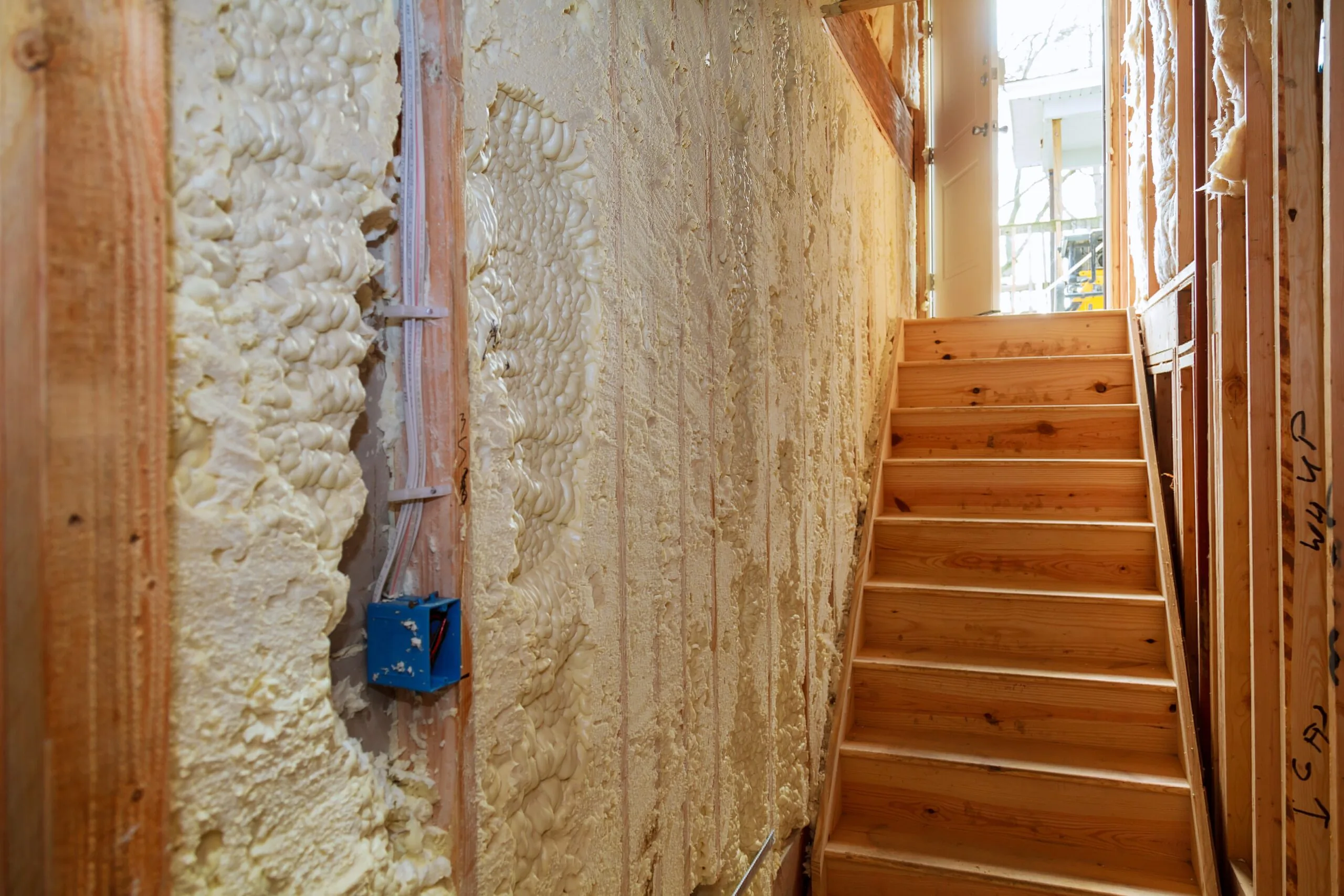
What is Insulation R-Value?
R-value measures a material’s resistance to heat flow — the higher the R-value, the better it insulates. The “R” stands for “resistance,” and it’s the standard used across North America to compare insulation products. In a Saskatchewan climate with extreme cold, choosing the right insulation R-value isn’t just about comfort — it directly affects your energy bill and your building’s long-term health.
Saskatchewan Building Code Minimums
- Exterior walls: R-22
- Attic spaces: R-52
- Basement walls: R-20
R-Values Per Inch by Material
| Material | R-Value / inch |
|---|---|
| Fiberglass batts | ~3.5 |
| Open-cell spray foam | ~3.5 |
| Closed-cell spray foam | ~6.5 |
Thickness Required to Hit Minimums
| Target | Fiberglass | Open-Cell | Closed-Cell |
|---|---|---|---|
| R-22 (walls) | 6.3″ | 6.3″ | 3.4″ |
| R-52 (attic) | 14.9″ | 14.9″ | 8.0″ |
| R-20 (basement) | 5.7″ | 5.7″ | 3.1″ |
Why Effective R-Value Matters More Than Thickness
Fiberglass and blown-in products meet R-value targets on paper, but they don’t air-seal. Every gap, crack, and electrical penetration becomes a heat escape route. Closed-cell spray foam achieves higher R-values in less thickness and seals those gaps simultaneously — making it the most thermally efficient choice for Prairie buildings.
Natural Resources Canada provides recommended insulation R-values by climate zone, including Saskatchewan’s cold climate requirements.
Related Services
Get a Free Quote
Ready to upgrade your insulation? CKC provides free on-site assessments across SK and AB.